Syrup and Coffee Flavor Pairing: Matching Syrups to Roast and Origin
 Tommie Chaney·
Affiliate disclosure: Sweeter Grind is a participant in the Amazon Services LLC Associates Program. We may earn commissions on qualifying purchases at no extra cost to you.
One bag of beans, a shelf of bottles, and only one of them belongs in tonight's cup.
Coffee syrup flavor pairing comes down to two moves. You can match the notes already in the coffee to amplify them, or contrast them to supply something the cup is missing. Which move you want depends on a single question: is this coffee already interesting? Match good coffee. Contrast flat coffee.
That is the whole framework, and it sounds obvious until you watch someone put hazelnut in a competition-lot Ethiopian. If you are working through the wider menu of café-style coffee drinks at home, this is the page that tells you which bottle to reach for once the drink itself is sorted.
The only two moves in coffee syrup pairing
Matching means picking a syrup that is already in the cup's vocabulary. A chocolate-and-nut Guatemalan with brown sugar or mocha. A berry-forward natural Ethiopian with honey or orange. The syrup does not introduce a new idea, it turns up the volume on an existing one, and the drink tastes like a more confident version of itself.
Contrasting means supplying what the coffee cannot give you. A heavy dark roast that reads flat and bitter gets lift from peppermint or orange. A thin, screamingly bright light roast gets body and roundness from vanilla or brown sugar. You are patching a gap rather than amplifying a strength.
Then there is the rule that will save you more money than any pairing chart: the better the coffee, the less syrup it wants, and past a certain point syrup is a waste of a good bag. A $28 bag of top-scoring Ethiopian, a normal 12 oz specialty price as of October 2026, under two pumps of hazelnut is just hazelnut. You paid for jasmine and bergamot, then covered them with a flavor that would have tasted the same on a supermarket blend. If a coffee has tasting notes you can actually find in the cup, drink it black or with a splash of milk, and save the syrups for the everyday bag.
Start with roast level: what syrup goes with dark roast, and what goes with light
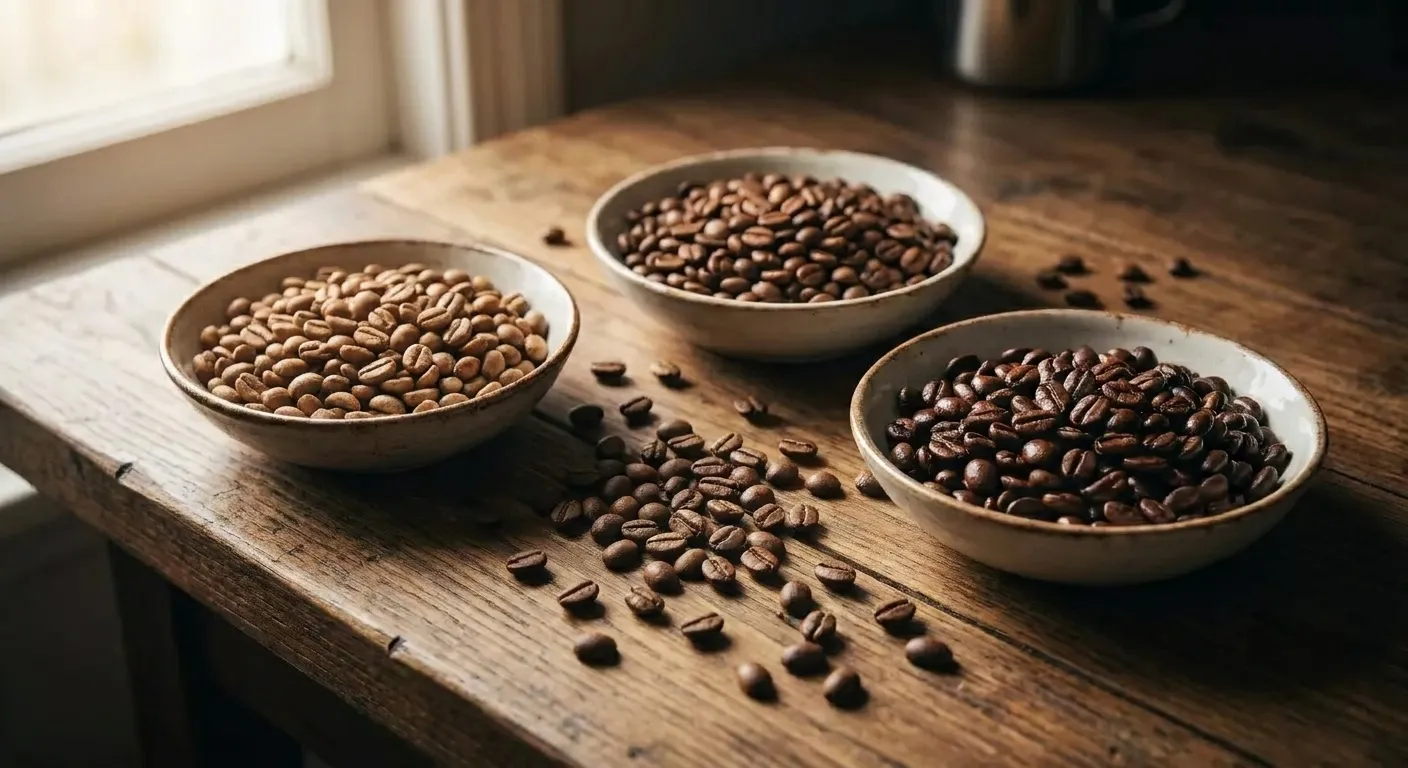
Roast level matters more than origin here, and the chemistry is not subtle.
A 2022 study of Catimor arabica published in Food Science found that titratable acidity, total phenols and chlorogenic acid all decreased significantly as roast degree increased, while volatile compounds moved the other way: light roasted coffee had significantly fewer volatiles than medium, and dark roasted coffee had the highest number and amount of volatile components. Sucafina's roasting resource describes the mechanism from the roaster's side, noting that a shorter Maillard reaction generally leads to a sweeter cup while a longer one leads to a more bitter profile, and that caramelization taken too far leaves the sugars "burnt and acrid."
Royal Coffee's roast-level guide states the sensory consequence plainly: dark roasts are "bold and intense," can taste "deep, smoky, and sometimes bitter," and "roasting to this level will mask origin characteristics found in light and medium roasts."
So:
- Dark roast and espresso blends. The origin notes are gone, and what is left is body, roast character and bitterness. Match it with mocha, toasted caramel or brown sugar, which sit in the same roasted register. Or contrast hard: peppermint and orange both cut through dark-roast bitterness instead of stacking on top of it. This is the one roast level where a strong, loud syrup is the right call.
- Light roast. High acidity, delicate aromatics, often a thin body. Match the fruit and florals with honey, orange or a lavender syrup. Contrast with vanilla or brown sugar when the cup is bright to the point of being sharp and you want to round it out. Avoid mocha and hazelnut, which bury everything you paid for.
- Medium roast. The forgiving middle. Both moves work, origin character is still partly intact, and almost any mainstream flavor lands somewhere between fine and good.
Origin pairings for light and medium roasts
Origin only matters while the roast is light enough to preserve it, so everything below assumes a light to medium roast. Breville's guide to specialty coffee origins describes the broad regional patterns, while noting that microclimates and terrain vary enough from country to country that there is no single regional flavor, and that processing method shapes the cup too. For the full tour, our coffee growing regions and flavor profiles article walks country by country.
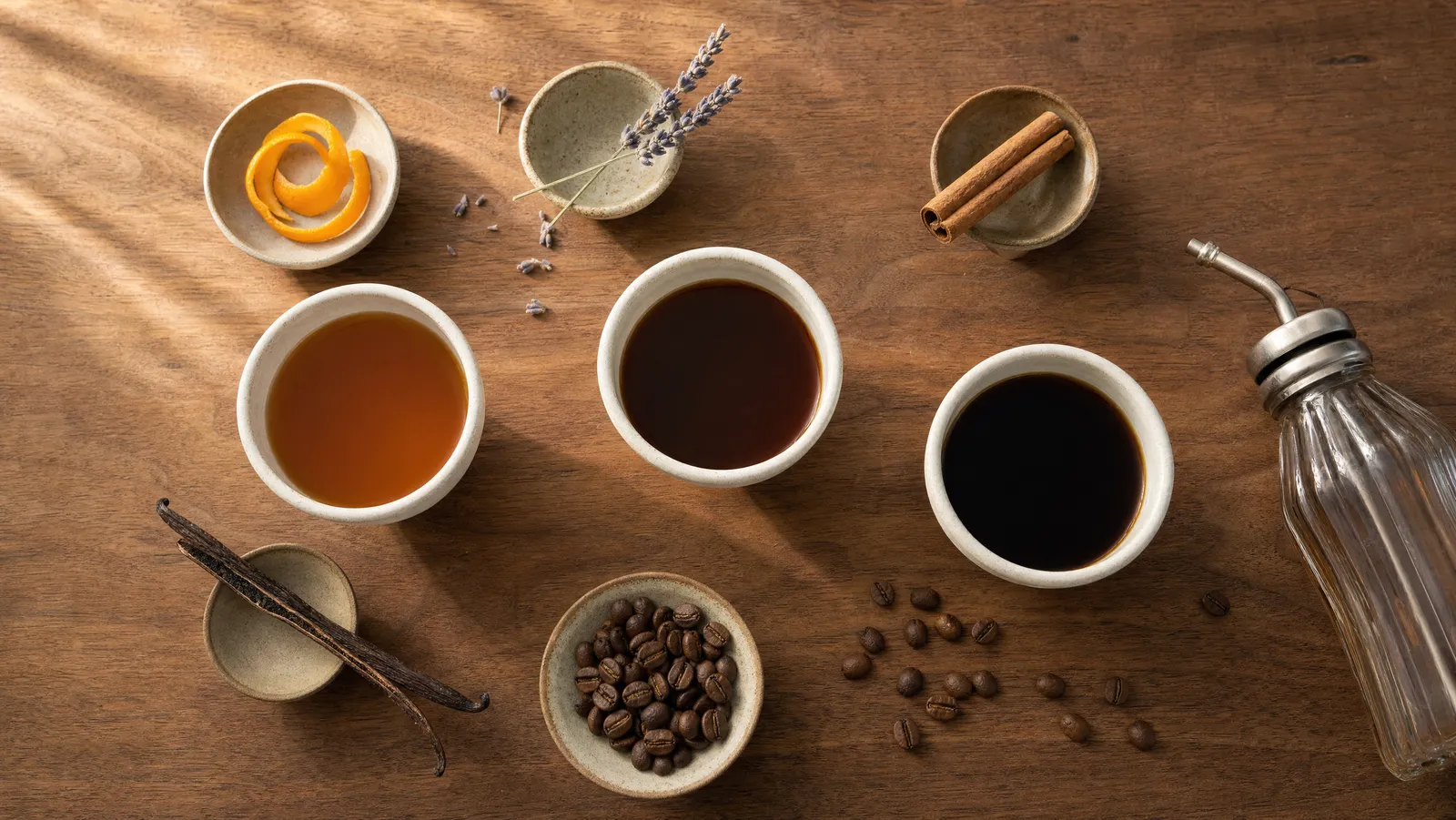
East Africa (Ethiopia, Kenya, Rwanda, Burundi). Floral, berry, citrus, high acidity, light body. Match with honey or orange. Contrast with vanilla when you want body without covering the fruit. Skip hazelnut and mocha entirely. Lavender is the one we would make rather than buy: Torani and Monin both bottle it, but a homemade version lets you dial the floral intensity down to where it meets the coffee instead of burying it, and it is easy to brew with our homemade syrup recipes.
Central America (Guatemala, Costa Rica, Honduras, El Salvador). Chocolate, nut, caramel, balanced acidity. Match with brown sugar or hazelnut. Contrast with orange, which turns a washed Guatemalan latte into something closer to a chocolate orange. This region takes syrup better than any other.
South America (Brazil, Colombia, Peru). Cocoa, nut, low acidity, heavy body. Match with mocha or caramel. Contrast with raspberry, because chocolate and raspberry is a classic for a reason and a peanut-and-cocoa Brazilian gives it a real base to sit on.
Indonesia and Asia-Pacific (Sumatra, Sulawesi, Java). Earthy, herbal, full body, low acidity. Match with brown sugar or a chai-style spice syrup. Contrast with coconut, which lightens the earthiness without fighting it. Berry and citrus syrups clash here, and we would not bother.
If you are not sure what is in your bag, our coffee bean finder will narrow it down by origin and flavor profile faster than guessing from the label.
Milk flattens everything, so bright pairings disappear in a latte
A pairing that sings in black coffee can vanish in a 12 oz latte, and this is where most pairing lists fall over.
A 2025 study in the Journal of Dairy Science reported that milk protein acts as a mediator binding coffee molecules, and that its sensory panel found higher milk protein concentrations shifted perceived bitterness and astringency while raising overall acceptance: at 90 mg/mL of milk protein, overall sensory acceptance reached 7.40 out of 10, against 3.88 for plain black coffee. A 2025 review in Foods on milk-coffee product interactions goes further, describing non-covalent protein-polyphenol complexes and interfacial partitioning at fat-globule membranes as the mechanisms that control volatile retention and astringency in these drinks.
Translated into kitchen terms: milk protein binds the compounds that make coffee taste sharp and astringent, and milk fat holds onto aroma molecules instead of releasing them to your nose. The cup gets rounder and quieter.
The practical rule is that delicate pairings belong in black or lightly-milked drinks, and heavy pairings survive milk. A honey-and-orange pairing on a washed Ethiopian is wonderful as a black iced coffee and nearly inaudible under eight ounces of whole milk. Vanilla, caramel, mocha, hazelnut and brown sugar all survive a latte, which is a fair part of why those five flavors turn up on most café menus. Floral and fruit syrups are a cortado or an Americano play.
Hot vs iced: cold mutes both aroma and sweetness
Temperature changes the answer twice over, on aroma and on sweetness.
On aroma, a study of serving temperature in Bourbon Caturra coffee found that volatile release largely followed the van't Hoff relationship and increased sharply above 40 °C. A Gerstel application note on chilled ready-to-drink coffee makes the same point from the lab bench, noting that analyzing these products is difficult precisely because of the reduced volatility of key odor-active compounds at low serving temperatures.
On sweetness, a 2015 human psychophysics study in Chemical Senses reported that cooling to 5 to 12 °C can directly reduce perceived sweetness intensity, a finding its authors say has implications for the TRPM5 hypothesis of how temperature acts on sweet taste.
Both effects point the same way: iced drinks need more syrup than hot ones to land in the same place, and then ice melt dilutes them further. In our experience, a pairing dialled in hot needs roughly one extra pump when you build it over ice. It also means the aroma-driven pairings, the florals and the citrus, lose the most in an iced drink, while the sweet, body-forward ones lose the least.
Dose: a right pairing at the wrong dose still tastes wrong
Pairing is half the job. Dose is the other half, and it is the half people get wrong.
According to Torani's own FAQ, the syrup pump the company sells dispenses about a quarter of a fluid ounce per pump, while its 64 oz sauce pump dispenses about half a fluid ounce and its puree and coffee blends pump dispenses about a full fluid ounce. Those are not interchangeable, so check which pump is in the bottle before you count presses.
Our starting point is two pumps, about 0.5 fl oz or 15 ml, in a 12 oz drink, tasted before you add more. Three pumps is a dessert. For a contrast pairing you can usually go lower still, since the whole point is a corrective rather than a flavor in its own right: one pump of peppermint in a dark-roast latte does the job that three pumps of vanilla cannot. We break the dosing down per bottle in our best coffee syrups comparison.
This is also the argument for bottles over pre-flavored beans. A pump is a dial you can turn cup by cup, whereas a flavored bag commits every cup in it to one flavor at one strength, which is the core of the flavored coffee beans vs syrups question.
The coffee syrup pairing guide in one table
| Coffee character | Match with | Contrast with | We would skip |
|---|---|---|---|
| Light African (Ethiopia, Kenya) | Honey, orange | Vanilla, for body | Hazelnut, mocha, anything nutty |
| Washed Central American (Guatemala, Costa Rica) | Brown sugar, hazelnut | Orange | Peppermint |
| Brazilian and South American | Mocha, caramel | Raspberry | Lavender and florals |
| Indonesian and Asia-Pacific | Brown sugar, chai spice | Coconut | Berry and citrus syrups |
| Dark roast and espresso blends | Mocha, toasted caramel | Peppermint, orange | Delicate florals, they vanish |
| Decaf | Vanilla, caramel | Cinnamon | Heavy mocha in a small drink |
Decaf gets its own row because, in our experience, it tends to read rounder and lower in acidity than the same bean would caffeinated, so there is less character to amplify and the body-forward matching syrups do more work than contrast ones.
The best latte flavor combinations we keep coming back to
Three that have earned their place, with real numbers.
Washed Guatemalan, medium roast, two pumps brown sugar, 8 oz whole milk. The purest matching pairing on this page. Brown sugar sits exactly on top of the cocoa and toasted-nut notes already in the cup, and because it is a match rather than a contrast, two pumps reads as sweetness rather than as a flavor added on.
Dark roast espresso, one pump peppermint, 6 oz milk. One pump, not two. The peppermint is there to cut bitterness and give the finish some lift, not to turn the drink into a candy cane. If you can name the flavor as peppermint before you can name it as coffee, you have overpoured.
Natural Ethiopian, two pumps honey-lavender, 8 oz water over ice, no milk. Black, iced, no dairy to mute the florals. The lavender meets the coffee's own floral notes and the honey rounds out the acidity. This is the one that proves the milk rule: make it as a latte and the lavender all but disappears.
Frequently Asked Questions
What syrup goes with dark roast coffee?
Mocha, toasted caramel and brown sugar if you want to match the roasted character, or peppermint and orange if you want to cut through it. Royal Coffee's roast guide notes that dark roasting masks the origin characteristics found in lighter roasts, so there is no delicate fruit left to protect. That makes dark roast the most syrup-tolerant coffee on the shelf, and the one place a loud flavor is genuinely the right answer.
Which syrups work with a light Ethiopian?
Honey, orange and lavender, all of which meet the floral and berry notes already there. Vanilla works as a contrast when the cup is sharp and you want more body. Avoid hazelnut and mocha, which will simply replace the coffee's flavor with their own. Drink these pairings black or with very little milk, since dairy mutes exactly the delicate aromatics you are trying to highlight.
Does syrup pairing change for iced coffee?
The pairings hold, but the dose does not. Research on serving temperature found that volatile release from coffee rises sharply above 40 °C, and a 2015 psychophysics study found that cooling to 5 to 12 °C can directly reduce perceived sweetness. Cold mutes both aroma and sweetness, so iced drinks typically need about one more pump than the same recipe served hot, before you even account for ice melt.
How much syrup should I use in a 12 oz latte?
Start at two pumps. Torani's FAQ puts its syrup pump at roughly a quarter of a fluid ounce, so two pumps is about 0.5 fl oz or 15 ml. Taste before adding a third. Contrast pairings often need only one pump, and plant milks that are already sweetened will land sweeter at the same dose than whole dairy does.
Should I put syrup in expensive single-origin coffee?
Usually not. If a bag has tasting notes you can actually pick out in the cup, syrup covers the thing you paid extra for. Keep one everyday bag for flavored drinks and drink the good coffee black. The exception is a very light, very acidic single origin where a single pump of vanilla rounds out the sharpness without masking the fruit.
The short version
Match when the coffee is interesting, contrast when it is not, and check the roast level before the origin because roast is what decides whether origin still matters. Expect milk to flatten delicate pairings and cold to mute everything, and start at two pumps regardless. If you want the rest of the menu these bottles serve, our guide to coffee shop drinks at home covers the drinks themselves.