Where to Buy Fresh Specialty Decaf (and What to Avoid)
 Tommie Chaney·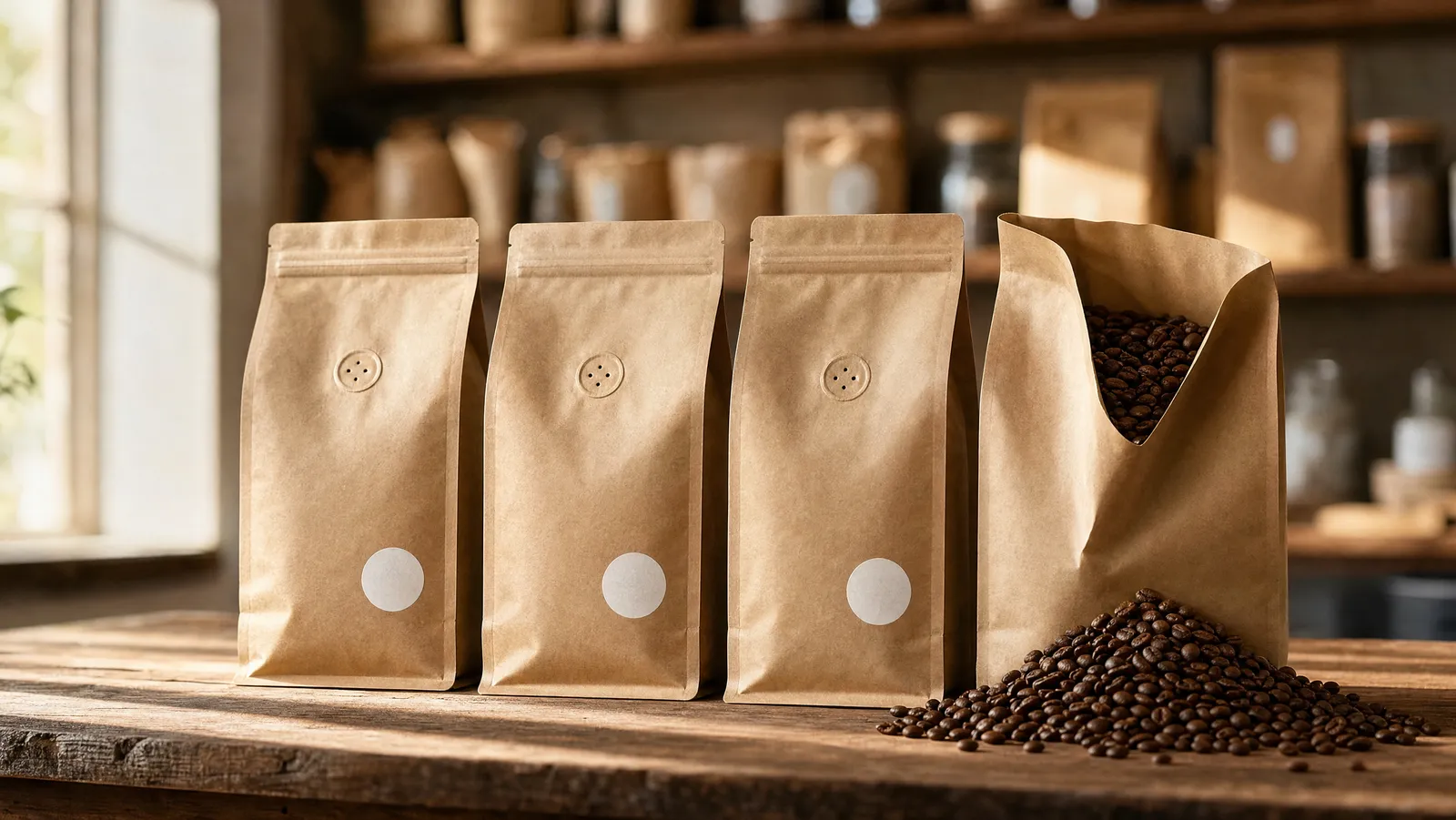
Affiliate disclosure: Sweeter Grind is a participant in the Amazon Services LLC Associates Program. We may earn commissions on qualifying purchases at no extra cost to you.
The short answer to where to buy decaf coffee is direct from a specialty roaster that prints a roast date on the bag. That rule outranks price, brand and certification, because a decaf bag with no date on it is a bag you cannot evaluate. Here is every channel ranked, best to worst, and what to do when the best one is closed to you.
This is a guide to channels, not beans. For the bags themselves we keep a list of the best decaf coffee beans; for the chemistry, see our decaf coffee guide. This page covers where you hand over your money, and what you can tell about freshness then.
Where to Buy Decaf Coffee, Ranked
We rank on one criterion — can you see the roast date before or shortly after you pay — with price as the tie-breaker.
| Channel | Roast date visible? | Typical freshness on arrival | Price | Best for |
|---|---|---|---|---|
| Roaster's own website | Yes, on the bag | Days old | Highest per oz | Caring about the cup |
| Roaster subscription | Yes | Days old, on your cadence | High, often discounted | Fixing cadence |
| Local roaster or cafe shelf | Usually, before you pay | Varies; check it | Mid to high | Buying today |
| Specialty online retailer | Sometimes | Fresh, plus a shipping leg | Mid | Sampling roasters |
| Amazon | Almost never | Unknown; use proxies | Lowest per oz | Convenience and bulk |
| Supermarket shelf | Best-before only | Often months | Lowest | Emergencies |
1. Direct from a specialty roaster. Everything below is a compromise against it. The roaster prints the date because it flatters them, many roast after the order lands, and nothing waits in a warehouse.
2. A roaster subscription. Identical freshness, and it fixes the problem decaf drinkers actually have, which is cadence rather than sourcing. Decaf is usually the second coffee in a house, so it gets drunk slowly, so people buy too much and finish the bag long after it was good.
3. A local roaster or a cafe's retail shelf. You can read the bag before you pay, which no online channel offers. The catch: decaf is a low-volume line for almost every cafe, so the decaf bag is often the oldest on the shelf. Check the date; a good cafe does not guarantee a fresh bag.
4. Specialty-focused online retailers. Curation beats a general marketplace and roast dates are sometimes shown, but you have added a warehouse and a shipping leg.
5. Amazon. Convenient, usually cheapest per ounce, and almost never shows a roast date. There is a sensible way to shop it, below, but you buy on inference, not information.
6. Supermarket shelf decaf. Last, and not close. Trade Coffee's freshness guide notes that grocery-shelf coffee often lacks a roast date and that those beans may sit in warehouses or on shelves for months after roasting. Dark roasting hides much of that, which in our reading is one reason so much shelf decaf is dark.
Why Decaf's Freshness Window Is Tighter
Start with ordinary coffee. Trade Coffee puts the peak at five to 21 days after the roast date, with days one to four the heaviest degassing phase and the delicate floral and fruity aromatics fading from around day 15. Stone Creek Coffee gives a narrower three to 14 days. The useful life of a bag is weeks, not months.
Decaf sits on a tighter clock for structural reasons. The West Berkshire Roastery explains that decaffeinated beans are more porous than regular beans as a result of the Swiss Water process, and that more porous means CO2 off-gasses faster after roasting. Its guidance: four to six weeks from roast date to noticeable flavor decline, seven to 21 days for espresso, and buy only what you will use within three to four weeks.
The internet overstates this, so we will not: the same roastery says plainly that decaf "doesn't go dramatically stale faster than regular coffee". Decaf's window is a little tighter and a lot less forgiving, on top of a supply chain that already adds weeks. See also resting and storing freshly roasted coffee.
Buying Direct From a Roaster
Which roaster, though. Sweeter Grind maintains our directory of over 200 US specialty roasters, filterable by region, roast style and specialty. Use it in two steps.
Filter to your own region first. Shipping is dead time on a bag with a short window, and a roaster three states away is simply a fresher bag than one on the far coast. It is the cheapest freshness upgrade there is.
Then check whether the roaster actually lists a decaf. Plenty of excellent roasters keep exactly one decaf SKU and never promote it: no shelf talker, no front-page slot, often no mention on the subscription page. If the shop page is not obvious, email and ask.
A roaster's own site also carries the label information Amazon strips out: process, origin, altitude, roast date. See how to read a coffee bag label for what to prioritize, and how decaf coffee is made for what the named processes do.
Decaf Subscriptions: What a Good One Lets You Do
Three capabilities separate a subscription from a standing order:
- Choose the interval. Weekly, every two weeks, monthly. If the only options are monthly and cancel, the roaster designed for its logistics, not your freshness window.
- Skip a delivery. You will go away, or still have half a bag. Skipping one shipment without unsubscribing stops you stockpiling.
- Change the bag. Swapping origin, roast level or size lets you drop to a smaller bag when you are not drinking it fast enough.
If it cannot do all three, treat it as a recurring order. One more question: what day do they roast, and what day do they ship? Roasting Tuesday and dispatching Tuesday beats dispatching Friday, and that never appears on the marketing page. Most roasters in the roaster directory run subscriptions.
Buying Decaf on Amazon: What You Can and Cannot Tell
We are an Amazon affiliate recommending four Amazon listings, so the limitation comes first.
Amazon listings almost never show roast dates. Not in the title, not in the bullets, not in the specifications — and not on any of our four picks. Nor can you see how long a unit has sat in a fulfillment center, and decaf moves more slowly than caffeinated coffee: National Coffee Association data from spring 2025, reported by Coffee Intelligence, put decaf's share of US coffee consumption at 12% in 2025, up from 9% in 2024. Real growth, but on a small base that turns over slowly.
Two visible proxies do predict freshness:
- Does the seller state that it roasts to order or in small batches? That describes the part of the timeline the seller controls.
- Does the bag have a one-way degassing valve? The packaging manufacturer ePac describes such a valve as a one-way vent with two jobs, letting CO2 out and keeping oxygen from getting in, which prevents oxidation and prolongs shelf life. Its absence on whole bean coffee is a warning sign.
Our four picks were chosen on sourcing transparency, not taste. Each names its decaffeination process, three name an origin or roasting location, two state a cadence. We have not tasted, brewed or cupped any of them.
Whatever you buy, check the bag on arrival. No roast date, or a date more than a few weeks old, and you should send it back. That advice costs us a commission sometimes and is still right.
| Pick | Bag | Size | Price per oz | Process named | Origin named | Roast-to-order claim |
|---|---|---|---|---|---|---|
| Best Roasted-to-Order | Nature Source Swiss Water Decaf | 1 lb | ~$1.65 | Swiss Water | Peru | Yes |
| Best Small-Roaster Single Origin | Mi Mundo Honduras Decaf | 1 lb | ~$1.25 | Swiss Water | Marcala, Honduras | Weekly batches |
| Best Value from an Independent Roaster | Verena Street Sunday Drive | 2 lb | ~$0.88 | Swiss Water | None named | None stated |
| Best Widely Stocked Organic | Copper Moon Swiss Water Decaf | 2 lb | ~$0.89 | Swiss Water | None named | Small batches |
Prices and per-ounce figures are as of September 2026.
Best Roasted-to-Order: Nature Source Swiss Water Decaf
This is the one listing that scores on both proxies at once. Nature Source states that the coffee is roasted to order in a micro drum roaster, roasted and packed in the USA, and sealed in a resealable one-way degassing bag. It also names a single origin, Peru, and a process, Swiss Water — see Swiss Water versus sugarcane EA for how those two differ.
The cost of that disclosure is the unit price: $26.32 as of September 2026 for one pound, roughly $1.65 an ounce, nearly double the two-pound bags below. The right trade for coffee you will finish in three weeks, the wrong one if you drink two decafs a month. Confirm the roast-to-order claim still appears on the current listing — it is the whole reason to pay the premium.
Best Small-Roaster Single Origin: Mi Mundo Organic Honduras Decaf
Mi Mundo gives the most specific sourcing statement of the four: a named town, Marcala in Honduras, the Swiss Water process, and a coffee the roaster describes as small-batch roasted weekly in Round Rock, Texas with a one-way degassing valve. It also lists local awards for its cafe between 2020 and 2024 — the roaster's own claims, which we read only as a sign this is a working coffee bar.
At $19.99 as of September 2026 for one pound, about $1.25 an ounce, it undercuts the Nature Source bag while disclosing more. One caveat: stock showed only one unit left when we checked in September 2026. A roaster roasting weekly in small batches holds no warehouse stock, which is the point, but this listing may be unavailable when you look.
Best Value from an Independent Roaster: Verena Street Sunday Drive
Verena Street pairs a named process with a named place at the lowest unit price here. The company says the coffee is freshly roasted and packaged in Dubuque, Iowa by an independent, family-owned business, using beans from Rainforest Alliance Certified farms with Orthodox Union kosher certification. At $28.00 as of September 2026 for two pounds, that is about $0.88 an ounce, half the Nature Source price.
Two honest deductions. No origin country appears on the listing at all, a real gap in a set chosen for sourcing transparency. And two pounds is a lot of decaf: unless you drink it daily, you will still be working through this bag well past the window above.
Best Widely Stocked Organic: Copper Moon Swiss Water Decaf
Copper Moon is the low-risk default. It names the Swiss Water process, states the result is 99.9% caffeine-free, carries USDA Certified Organic, non-GMO and kosher certification and, unlike the Mi Mundo bag, is reliably in stock. The company describes a small-batch slow roasting process and notes of light chocolate, citrus, floral and walnut. At $28.49 as of September 2026 for two pounds, about $0.89 an ounce.
Read the listing with a skeptical eye. Copper Moon's copy calls the process one that preserves "100% of the rich, vibrant flavor" and the coffee "mold-free, allergen-free": marketing statements, not certifications. The line about sourcing from 17 different countries describes the whole range, not this bag, which names no origin. As a dependable organic decaf that is actually on the shelf it qualifies; as a traceable coffee it does not.
How Much to Buy, and How Often
Given a four-to-six-week window, the right purchase is a 250 g or 12 oz bag you will finish inside two to three weeks, even when a two-pound bag has a better unit price. Unit price is only a saving if you drink it all while it is good.
Which puts us in an awkward position on our own list, so we will say it plainly: two of our four picks are two-pound bags, which is more decaf than most households should buy at once. They earn their places on disclosure and price per ounce. If you drink decaf occasionally, the one-pound options fit better whatever the arithmetic says.
Work out your rate first. One decaf mug a day at 18 g is about 125 g a week, so a 340 g bag lasts under three weeks and a 907 g bag about seven weeks. Buy whole bean, grind per brew, keep it sealed and dark; how to store coffee beans for freshness covers the rest.
What to Avoid
Reasons to put a bag down:
- No roast date on the packaging. Its absence is a decision, not an accident.
- A "best before" date presented as freshness. Roastar's coffee labeling guide notes that the FDA mandates only a statement of identity, net quantity of contents and the name and place of business, and that expiration dates are "not FDA-required, but standard in retail", typically six to 12 months post-roast. A best-before ten months out tells you what the packer will guarantee, not when the coffee was roasted.
- "Decaffeinated" with no named process. Swiss Water, sugarcane EA, CO2: a roaster who knows tells you. In our reading, silence usually points to a commodity solvent decaf bought on price.
- Pre-ground decaf. Stone Creek Coffee notes that ground coffee loses freshness faster than whole bean because more surface area meets oxygen, and decaf is already on the shorter clock.
- Bulk bins. Open to air and light, no date, usually the slowest-moving bin in the shop.
- Dark-roasted and anonymous. Dark roast plus no origin plus no process plus no date exists to hide age, not to express a coffee.
Why Decaf Costs More
The premium is structural. CoffeeGeek's analysis of decaf pricing names three causes: the process itself, where soaking, steaming and re-drying mean "typically around 10 to 12 percent of the weight you started with just disappears"; tolling fees charged by decaffeination facilities, which CoffeeGeek says ran $0.60 to $0.90 per pound before 2023 and climbed to $1.20 to $1.80 by 2024 and into 2025; and the green price, which the same piece puts near $1.72 per pound in 2023 against an all-time C-market high of $4.41 in early 2025. Yield loss on expensive coffee hurts far more than on cheap.
Then there is geography. Decadent Decaf points out that decaf begins as ordinary green coffee, travels to a decaffeination plant — often on another continent, because the economics work only at scale — then ships again to the roasting country: an extra leg before roasting starts.
Conclusion
Buy direct from a roaster that prints a roast date, subscribe so the cadence looks after itself, and buy the small bag. On Amazon, treat a stated roast-to-order or small-batch cadence and a one-way valve as the signals worth paying for, and return anything undated. For the processes and brewing adjustments, the complete guide to decaf coffee is next.
Frequently Asked Questions
How fresh should decaf be when it arrives?
Inside two weeks of roasting ideally, and no more than about a month. Trade Coffee puts specialty coffee's peak at five to 21 days after the roast date, and the West Berkshire Roastery gives four to six weeks from roast date to noticeable flavor decline for whole bean decaf. An undated bag cannot be judged at all.
Is supermarket decaf ever worth buying?
For an emergency, yes; as a habit, no. Trade Coffee notes that grocery-shelf coffee often lacks a roast date and that those beans may sit in warehouses or on shelves for months after roasting. If it is your only option, take whole bean, the lightest roast on offer, and a bag that names its process.
Why does decaf cost more than regular coffee?
Three compounding costs, per CoffeeGeek's pricing analysis: the process destroys mass, typically 10 to 12 percent of the starting weight; decaffeination plants charge a tolling fee, which CoffeeGeek says rose to between $1.20 and $1.80 per pound by 2024 and 2025; and both land on green coffee that has grown far more expensive. Decadent Decaf adds the extra shipping leg to and from the plant.
Is a "best before" date good enough?
No. It tells you when the packer stops guaranteeing quality, not when the coffee was roasted, and the two can be most of a year apart. Roastar's labeling guide notes that expiration dates are not FDA-required but are standard in retail, typically six to 12 months post-roast, and that roast dates are not required either. A roaster who prints one is choosing to be measured on it.
Is pre-ground decaf ever acceptable?
Only if you have no grinder and no plans to get one. Stone Creek Coffee notes that ground coffee loses freshness faster than whole bean because more surface area meets oxygen, and decaf's porosity already shortens its window. If you must, buy the smallest bag and finish it within a week or two. Our notes on why decaf tastes different and how to brew it cover getting more out of a compromised bag. Where the need is really convenience rather than beans — a hotel kettle, an office drawer — instant is a different product rather than a worse bag, and we compare the jars and sachets in the best decaf instant coffee.
How do I find a local roaster that actually sells decaf?
Filter our roaster directory to your region to cut shipping time, then check each candidate's own shop page, since many roasters carry exactly one decaf and never advertise it. One well-chosen regional decaf beats a national brand's full range, because the bag reaches you days rather than months after roasting.
Related reading
- The best decaf coffee beans
- Best decaf instant coffee
- How decaf coffee is made
- Best decaf espresso beans
- How to read a coffee bag label
- How to store coffee beans for freshness
- Our directory of over 200 US specialty roasters

Nature Source Coffee Swiss Water Decaf Single Origin Whole Bean
A 1 lb bag of single-origin Peruvian whole bean decaf, decaffeinated by the Swiss Water Process. Nature Source states that it roasts to order in a micro drum roaster, that the coffee is roasted and packed in the USA, and that it ships sealed in a resealable one-way degassing bag. At $26.32 as of September 2026, that is roughly $1.65 an ounce, the highest unit price of our four picks.

Mi Mundo Coffeehouse and Roastery Organic Honduras Swiss Water Process Decaf Whole Bean
A 1 lb whole bean Swiss Water Process decaf from a single named origin, Marcala in Honduras. Mi Mundo describes the coffee as small-batch roasted weekly in Round Rock, Texas, packed with a one-way degassing valve, and lists notes of dark chocolate, graham cracker, citrus and toasted nuts. At $19.99 as of September 2026, that is about $1.25 an ounce.
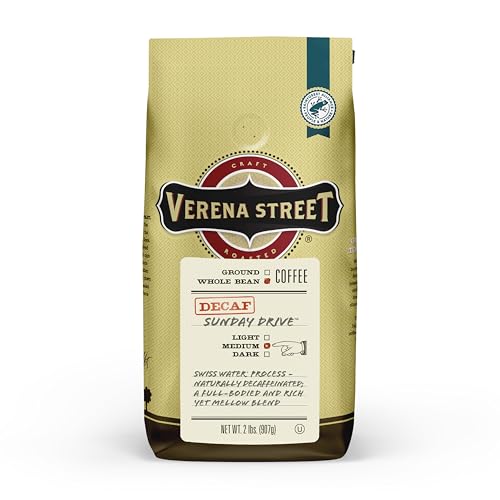
Verena Street Sunday Drive Swiss Water Process Decaf Whole Bean
A 2 lb whole bean medium roast decaffeinated by the Swiss Water process. Verena Street says the coffee is freshly roasted and packaged in Dubuque, Iowa by an independent, family-owned company, and that it uses beans from Rainforest Alliance Certified farms with kosher certification from the Orthodox Union. At $28.00 as of September 2026, that works out to roughly $0.88 an ounce, the cheapest per ounce here.

Copper Moon Swiss Water Decaf Medium Roast Whole Bean
A 2 lb whole bean medium roast decaffeinated by the Swiss Water process, which Copper Moon states leaves the coffee 99.9% caffeine-free. The company describes a small-batch slow roasting process and lists the coffee as USDA Certified Organic, non-GMO and kosher certified, with notes of light chocolate, citrus, floral and walnut. At $28.49 as of September 2026, that is about $0.89 an ounce.